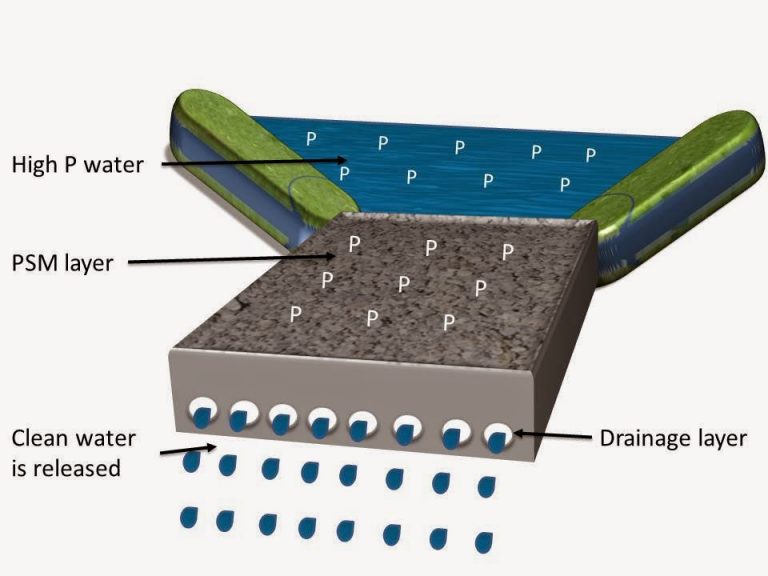
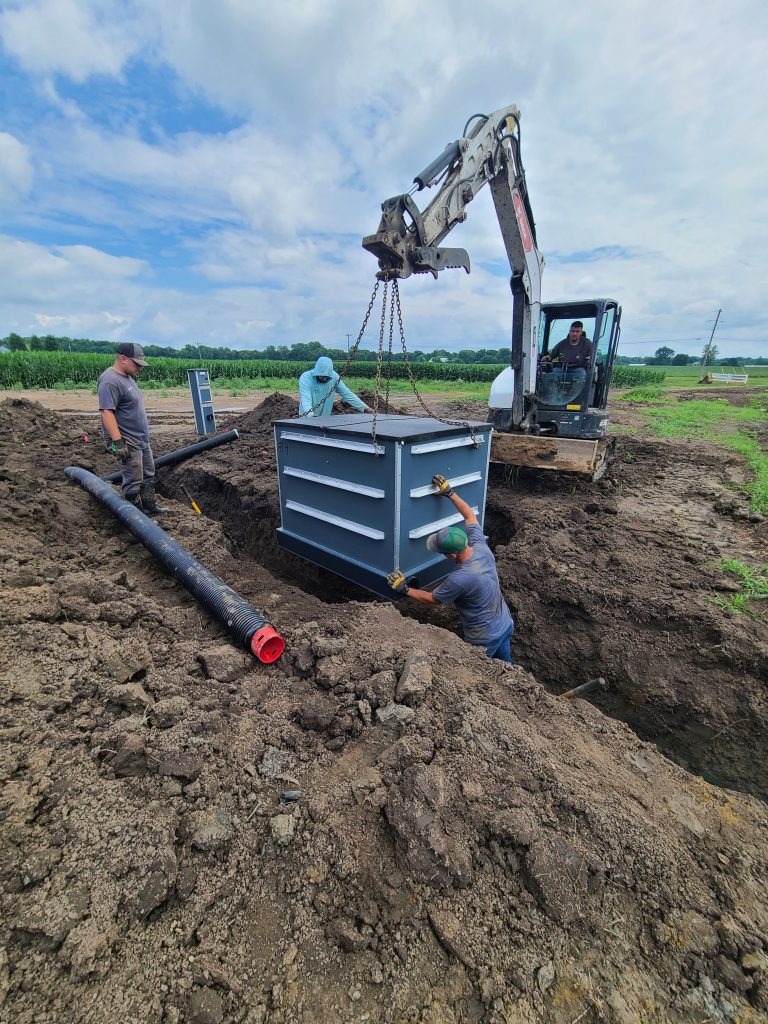
A phosphorus removal structure is a conservation drainage practice that works to remove dissolved phosphorus (DP) from tile-lined water.
This practice applies where phosphorus presents a resource concern to surface water bodies and is mobilized and transported as a dissolved constituent. Critical source areas of dissolved phosphorus in agricultural areas include subsurface (tile) drains, soils with phosphorus levels greater than the phosphorus sorption capacity, livestock-heavy use areas, manure storage and handling areas, and other areas with high impervious surface area and converging flows.
Phosphorus removal structures are essentially a landscape-scale filter capable of trapping dissolved P in the drainage water by using phosphorus sorption materials (PSMs).
Many types of PSMs are now available, including waste-recycled gypsum, steel slag, metal filings, fly ash, drinking water treatment residuals, as well as manufactured PSMs.
Studies have shown some materials to be more cost-effective than others, and metal filings mixed with pea gravel has been shown to be as budget-friendly as it is effective. A variety of materials have undergone evaluation and are contained inside the database of the P-trap software. New materials are also continuing to be studied at both public and private sector facilities.
Structure placement is site dependent, and the characteristics of that location will determine the amount of water flowing to potential installation locations. Accessibility is also an important consideration for placement, as you will need to be able to get to the filter to maintain it.
These practices should also always be constructed with an emergency over-flow in events flow rates exceed the capacity.
P-removal structures have also been shown to be very effective, having shown signs of reduction of up to 70 % in DP concentration and loading.
Costs vary widely, from as little as $3,000 to as much as $20,000, depending on the site, size, PSM materials used, and P-removal goals.