Welcome to Ecosystem Services Exchange!

About Us
At Ecosystem Services Exchange, assisting you with the wise use and management of your water resources isn’t just a mission — it’s our commitment.
What is Ecosystem Service Exchange (ESE)?
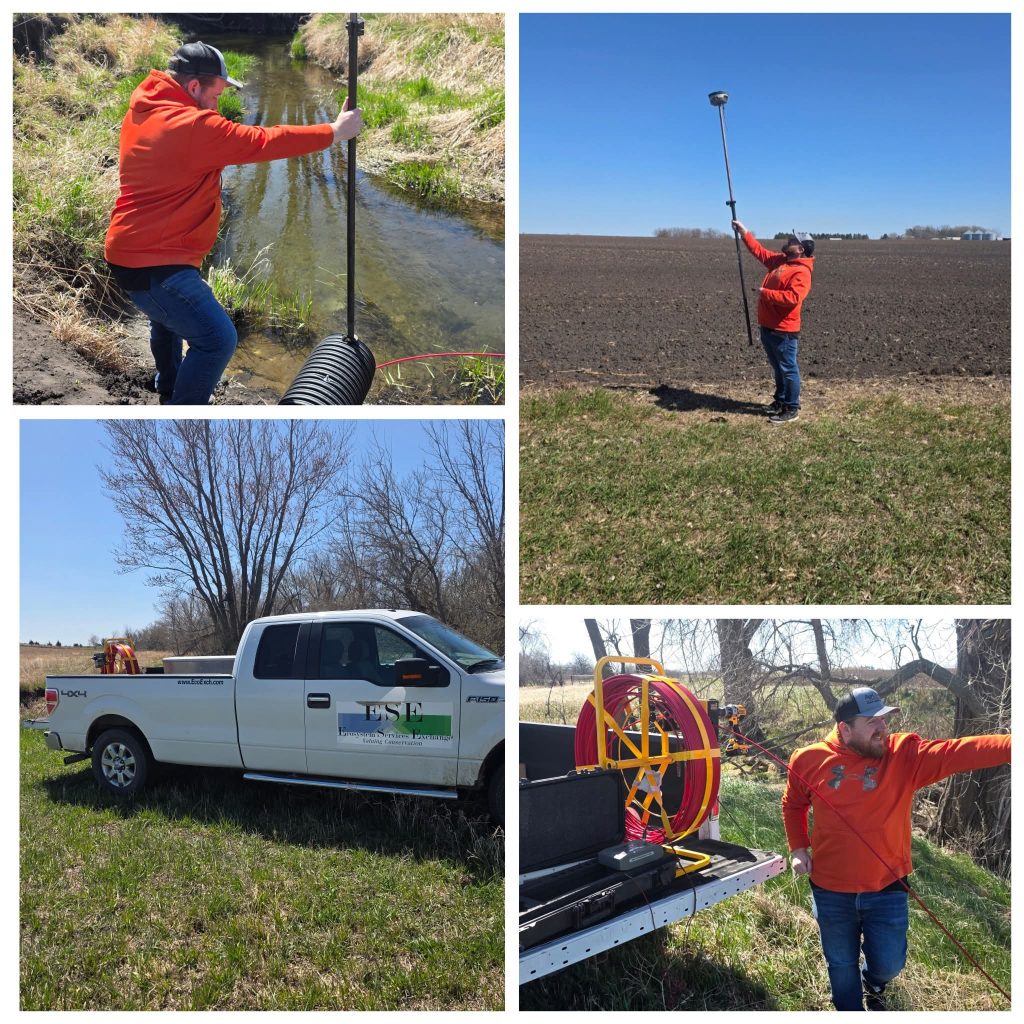
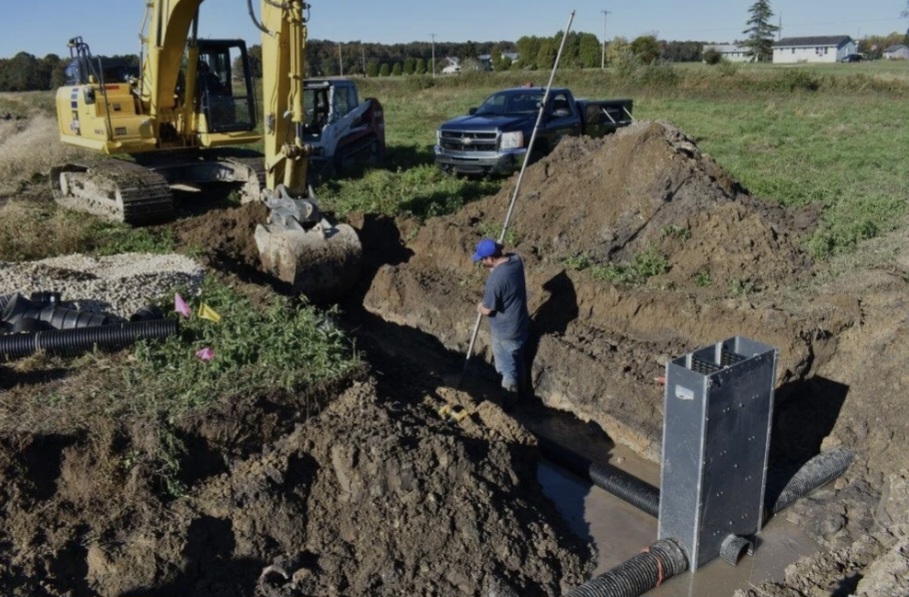
ESE is a limited liability corporation that works directly with landowners to improve their profitability and environmental performance through the adoption of conservation drainage practices and systems that enable effective use and management of water resources. ESE employs highly qualified and experienced technical specialists to determine site feasibility and then carry out the planning, design, and installation of conservation drainage practices and systems that enable landowners to optimize their water use. Optimized use of available water ensures crops receive the right amount of surface and subsurface water at the right times for crop productivity while also protecting and improving the environment.
What Conservation Practices Does ESE Provide Technical Services for?
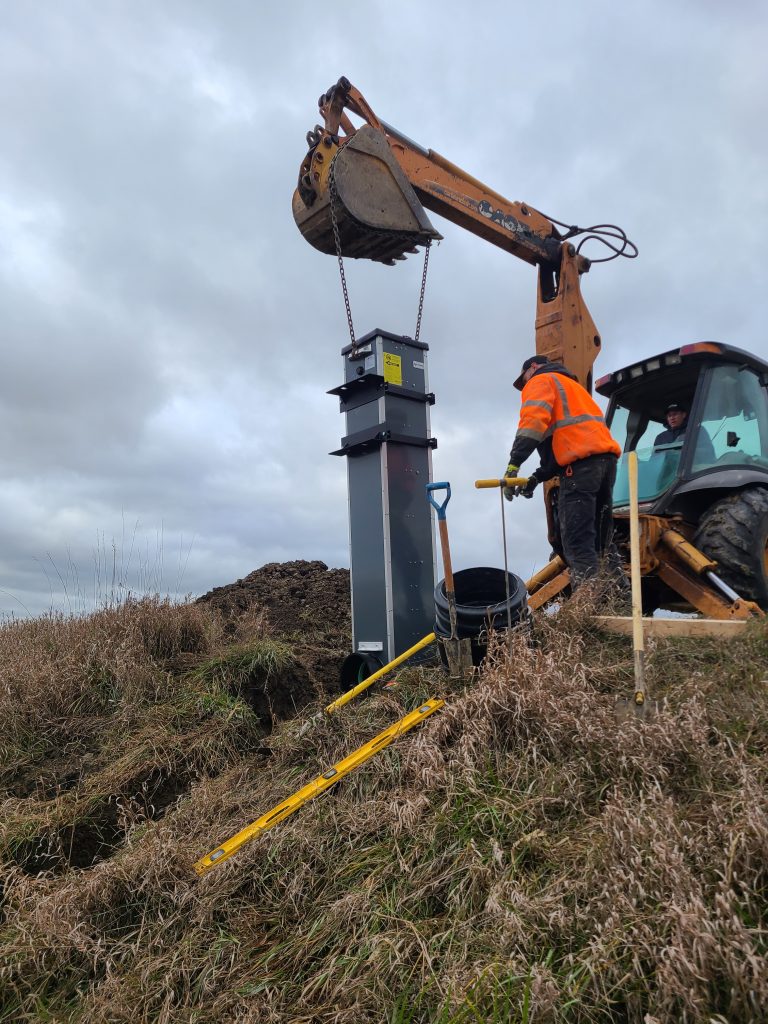
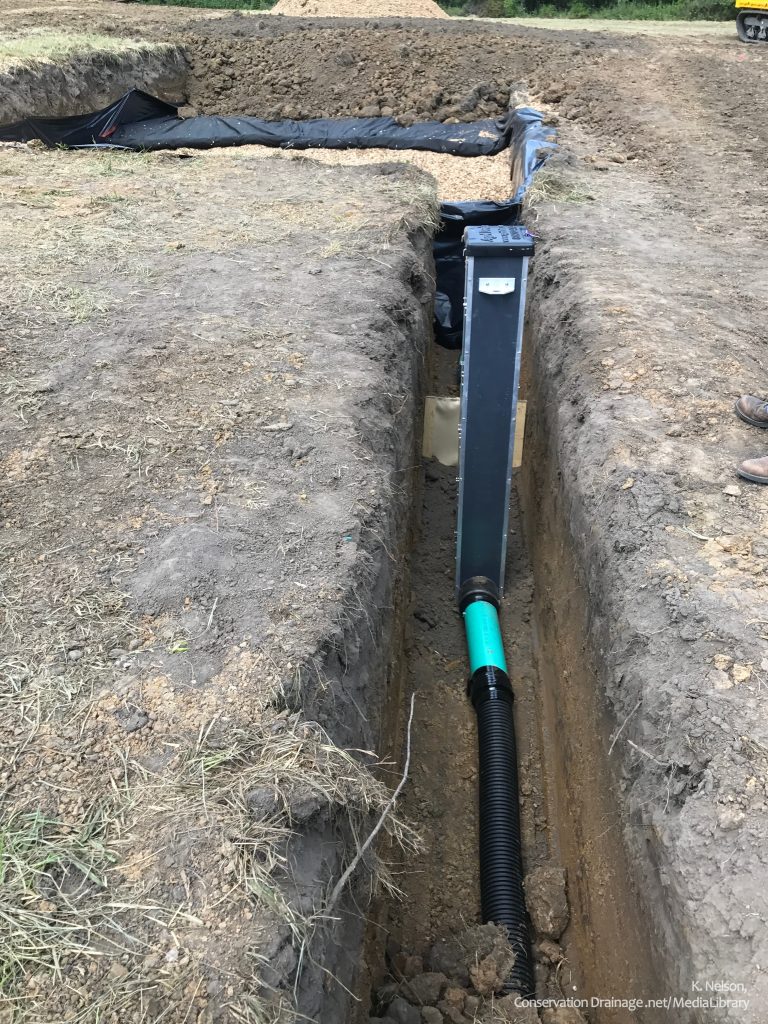
ESE’s technical work is performed under the leadership and oversite of a licensed professional engineer and multiple certified Technical Service Providers, registered with NRCS, who use a site-specific planning approach to respond to the unique needs of each agricultural operation. These technical specialists assist with a wide array of water management conservation practices designed and installed to NRCS conservation practice standards, including:
- Drainage water management (automated and manual)
- Saturated buffers (automated and manual)
- Denitrifying bioreactors (automated and manual)
- Structures for water control (automated and manual) and in tile line Water Gates
- Phosphorus removal systems
- Drainage water recycling and subsurface irrigation
- Constructed wetlands
How Does ESE Provide its Technical Services?
ESE works directly with landowners to help them meet their water management needs efficiently and effectively using NRCS’s time-tested and proven conservation practice standards, which are the “industry standard.” Based on its experience with thousands of ag producers since 2010, ESE knows that robust crop production, farm profitability, and healthy environmental outcomes are compatible goals with the right practices combined to address water management, agronomic, and soil health needs.
ESE technical services may be arranged directly by an ag landowner or through a private/public partnership project. Landowners come to ESE directly for technical services because they recognize their water management needs, value the role of conservation practices/systems, and desire ESE’s expertise in helping them to achieve both their production and conservation goals.
Who Does ESE Partner With?
ESE has partnered with many private and public sector entities in 19 states and Canada since 2010.
ESE has a long-standing business relationship with Agri Drain Corporation, a leading and recognized manufacturer and supplier of innovative, specialized, and proven conservation drainage equipment used in ESE’s practice designs and installations. ESE also works with many other businesses, including suppliers of drainage tile, providers of agronomic technical services, and land improvement/drainage contractors. ESE works on projects coordinated by local, state, and federal public agencies that support ag production, conservation, and the environment.
In particular, ESE enjoys close working relationships with innumerable land improvement/drainage contractors, whose expertise and skills are essential to the installation of conservation practices and systems. Land improvement/drainage contractors have a relationship of trust with landowners because of their proven ability on-the-ground in ag settings.
Ecosystem Services Exchange is a technical leader in helping landowners to reduce nutrient loss from agricultural lands. We deliver significant, reliable and quantifiable results so that you meet operational goals at lower cost. This reduces downstream impacts and community costs to treat water.
Whether it’s reducing nutrient loading in waterways, improving agricultural productivity or enhancing wildlife, we have the expertise and technical tools to help you implement cost-effective solutions.
Leadership Team
Our leadership team and support staff offer a unique combination of skills and experience in the fields of environmental conservation, agricultural land and water
management, and business and financial expertise.

Dave White
President, Ecosystem Services Exchange - Former Chief, Natural Resources Conservation Service
Dave has over 40 years of professional leadership experience in natural resource conservation with the Natural Resources Conservation Service (NRCS) and in the private sector. He was Chief of the NRCS from January 2009 to December 2012. As Chief, Dave led the largest private lands natural resource conservation organization in the United States and under his leadership NRCS created and implemented landscape level conservation initiatives that focused financial and technical resources on solving issues, particularly in the areas of water quality and wildlife.
Prior to serving as Chief, he was the NRCS State Conservationist in Montana. Dave also spent significant time on Capitol Hill in Washington, DC. In 2002, he was detailed to Republican Indiana Senator Richard Lugar, and in 2008 he was detailed to Democratic Iowa Senator Tom Harkin. During those times, he worked on the conservation titles of both the 2002 and 2008 Farm Bills. Prior to that, Dave was detailed to the Clinton White House where he worked on the Building Livable Communities Initiative.
Dave is married, has two grown children, one grandson, and three rescue dogs. Dave refuses to watch TV, believes that dogs are the most wonderful species on Earth, and still marvels that he somehow managed to graduate from the University of Missouri.
.
Alex Echols
Strategic Advisor
Alex started his environmental career on Capitol Hill, working for the Senate for 12 years, writing key conservation programs like the Conservation Title of the Farm Bill and an extensive rewrite of bilateral and multilateral foreign aid programs. Alex subsequently worked for a trade association using market incentives to encourage use of recyclables. He spent six years at the National Fish and Wildlife Foundation as deputy and then acting executive director. In 2001, he set up a consulting firm to help industry, landowners, the conservation community and government deliver more conservation for dollars invested. Alex is skilled at developing and implementing strategic action for philanthropic and corporate communities – helping develop conservation programs that fit their core values and deliver improved conservation return on investment.
Charlie Schafer
Chief Executive Officer and Founder
Tom Christensen
Chief Operating Officer
Tom has 46 years of professional experience at the field, state, regional, and national levels in support of public-private partnership efforts to assist farmers, ranchers, and forest stewards with their voluntary conservation needs. He joined Ecosystem Services Exchange (ESE) in early 2020 after retiring from a 40-year career with the U.S. Department of Agriculture (USDA). Tom’s USDA experience was gained while working for three different agencies, including 37 years with the Natural Resources Conservation Service (NRCS). During his USDA career, Tom held 16 different positions in nine separate locations in four states and National Headquarters. He was USDA Farm Production and Conservation (FPAC) Mission Area Deputy Chief Operating Officer, NRCS Associate Chief for Operations (Chief Operating Officer), NRCS Regional Conservationist for the 12-state Central U.S. Region, and also held five other national-level NRCS Senior Executive Service positions, including leading all conservation programs, clean water and animal husbandry programs, financial assistance programs, conservation technical assistance and operations, and information technology. Prior to these positions, he was the NRCS State Conservationist for Illinois.
Tom has traveled extensively throughout the U.S. on private lands conservation issues and opportunities. He is experienced in all aspects of the development, delivery, and leadership of efforts to support voluntary conservation including conservation and watershed planning and implementation, science and technology development and transfer, technical assistance quality assurance and optimization, and supporting information technology tools. Tom has a B.S. in forest management from Rutgers University, an M.S. in renewable natural resources conservation from the University of Connecticut and attended Duke University’s Public Policy Program for one year through a competitive selection under NRCS’s graduate school program offering.
Technical Team
Our technical team offers a unique combination of skills and experience in the fields of environmental conservation, agricultural land and water
management, engineering, and the on-farm planning, design, and installation of conservation drainage practices.
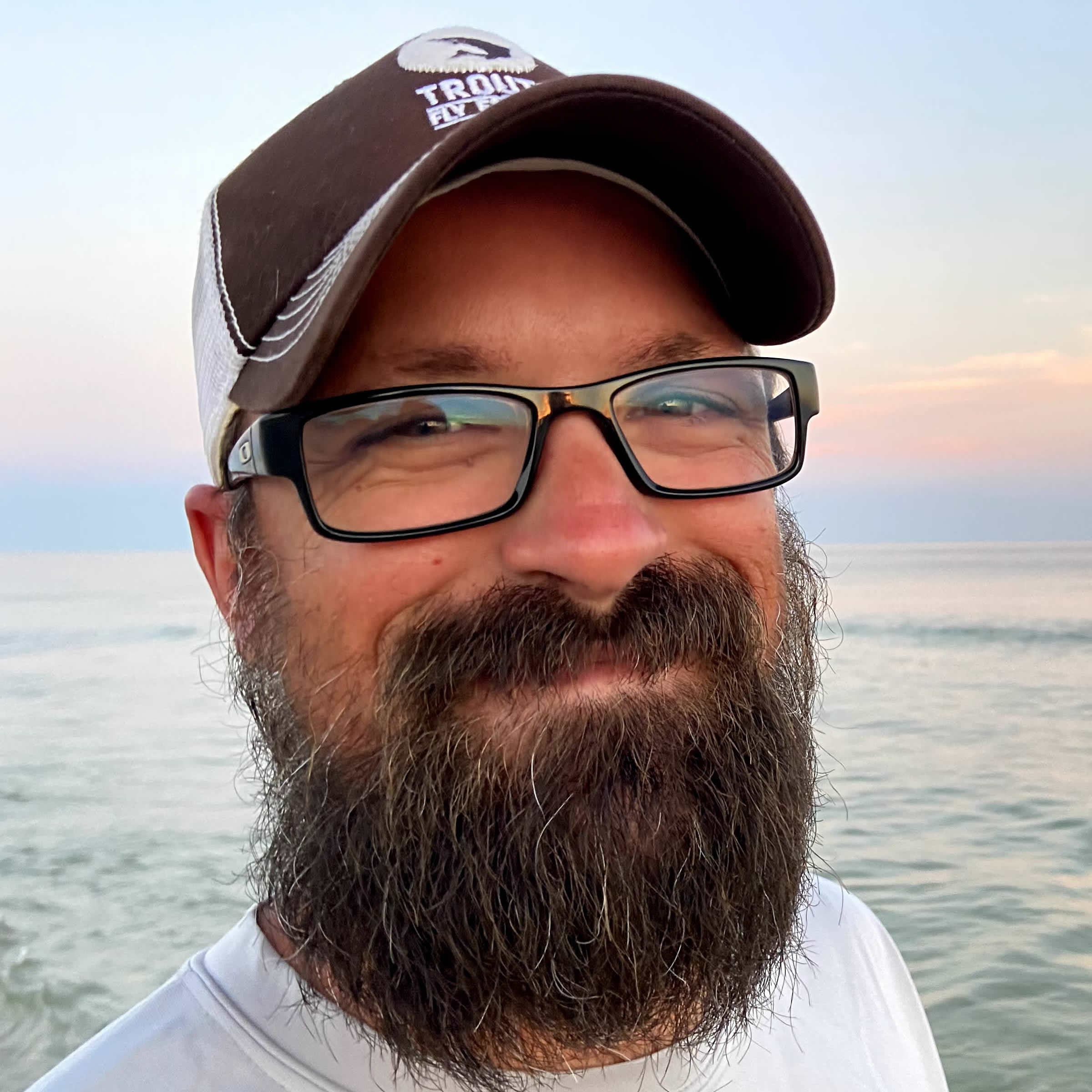
Ben Reinhart
Technical Services Manager
Ben holds a BS in natural resources and a MS in ag systems management from Purdue University. Prior to joining the ESE technical team, Ben worked as Director of Operations and Ag Water Management for Clark Farm Drainage Inc. in Indiana, where he was responsible for drainage project planning, design and delivery. He also has more than 10 years of experience in the public and academic sectors, which has ranged from leading conservation programs for local watershed projects in Indiana to serving as project manager for a $5 million, multi-state research project focused on increasing water storage in tile-drained landscapes to improve water quality and availability. He has authored multiple publications and on-line tools on innovative ag water management practices, including drainage water recycling, controlled drainage, and saturated buffers.
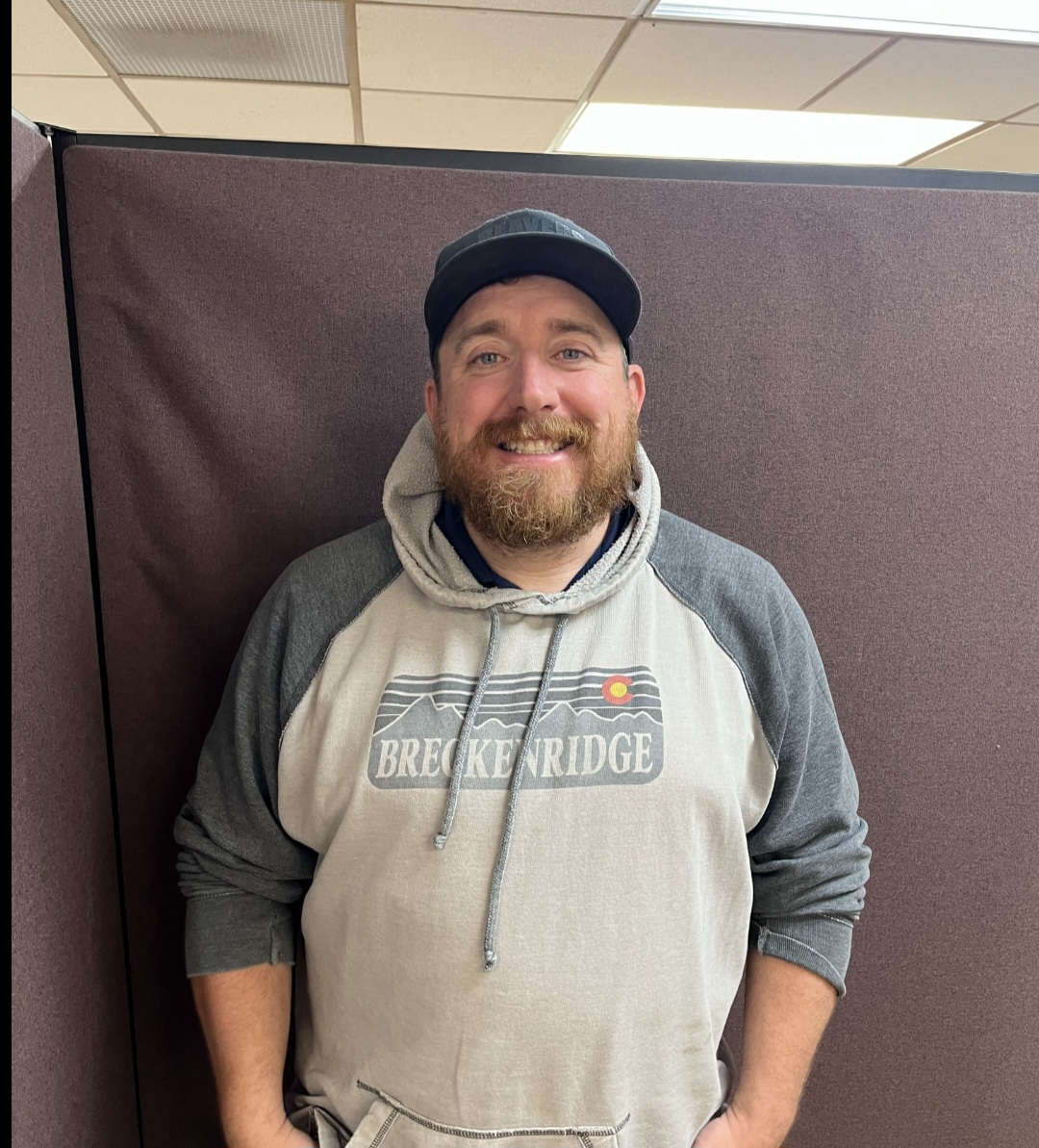
Andy Mackrill
Conservation Drainage Specialist
Andy is from Adair, Iowa. He has a bachelor’s degree in environmental science from Buena Vista University and is also a graduate of the Overholt Drainage School. He joined ESE in January of 2013 and has since been involved in the planning and installation of conservation drainage practices and sub-surface irrigation projects throughout the Midwest, Great Lakes, and Chesapeake Bay. Andy is a NRCS certified Technical Service Provider.
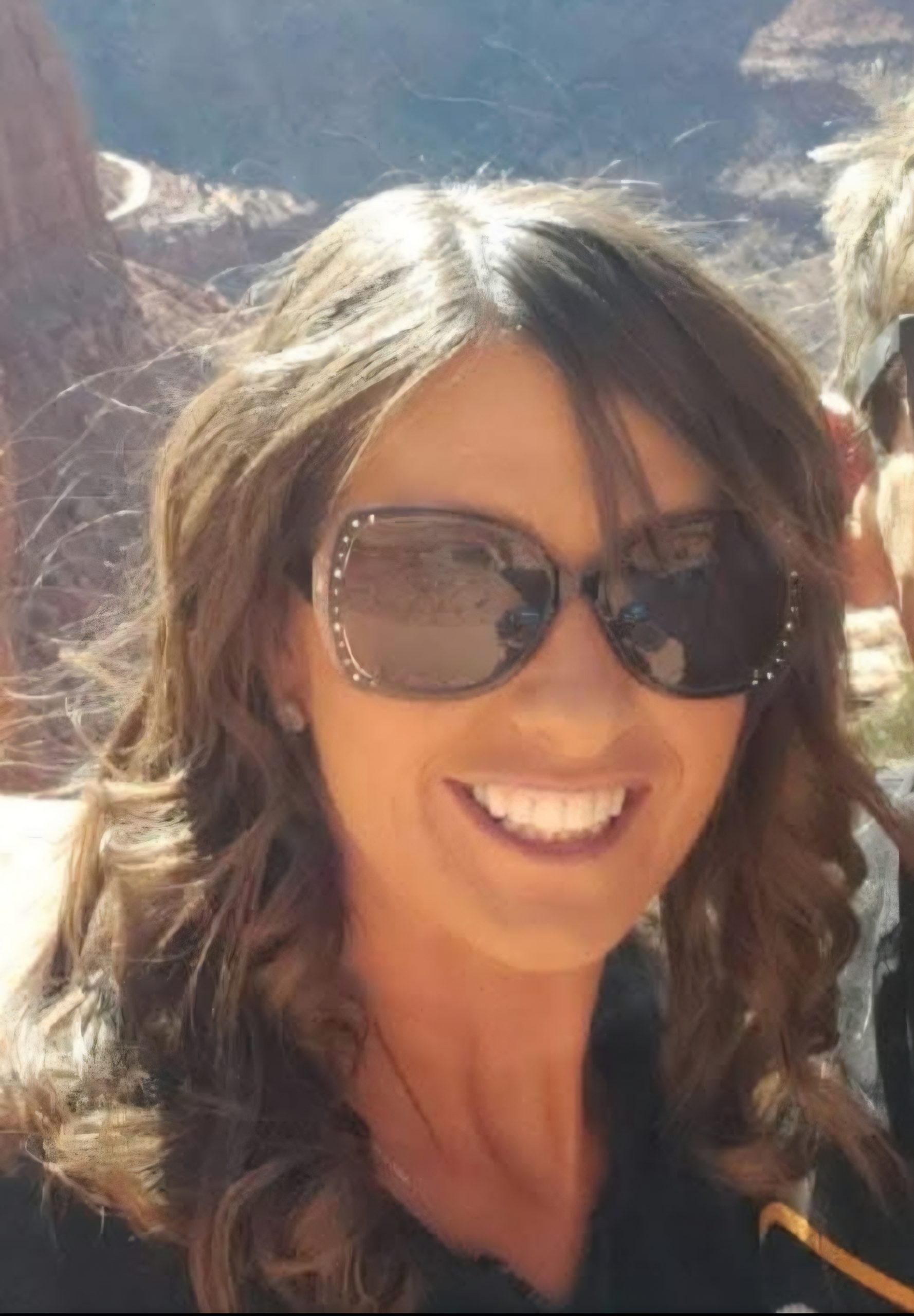
Kate Schafer
Conservation Drainage Coordinator
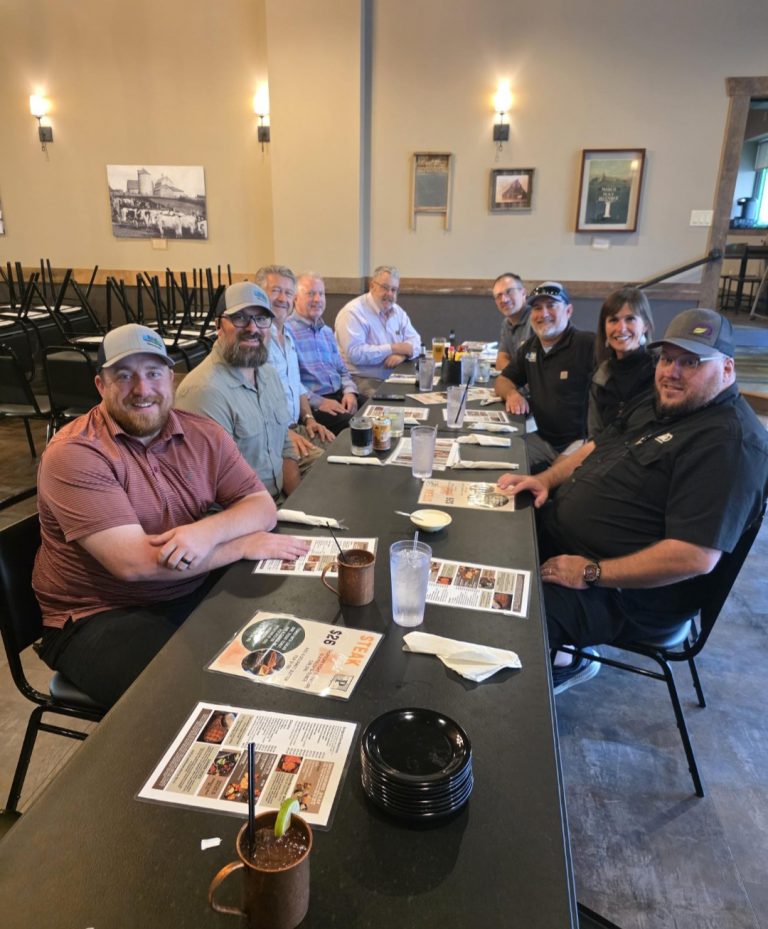
At ESE, we combine science, service, and sustainability to deliver better results for both agriculture and the environment
Top Links
Services
© Copyright 2026 Ecosystem Services