Welcome to Ecosystem Services Exchange!


Saturated Buffers
Saturated buffers use a control structure to divert tile-drained water though a vegetated buffer.
A saturated buffer is a conservation drainage practice that removes nitrates from subsurface drainage tile lines.
It is an area of perennial vegetation between agricultural fields and waterways where tile outlets drain.
Tile lines connect to a control structure, which distribute water laterally under the buffer/vegetated surface.
Saturated buffers remove little to no land from production, require little maintenance, and do not affect crop yield when placed in correct sites.
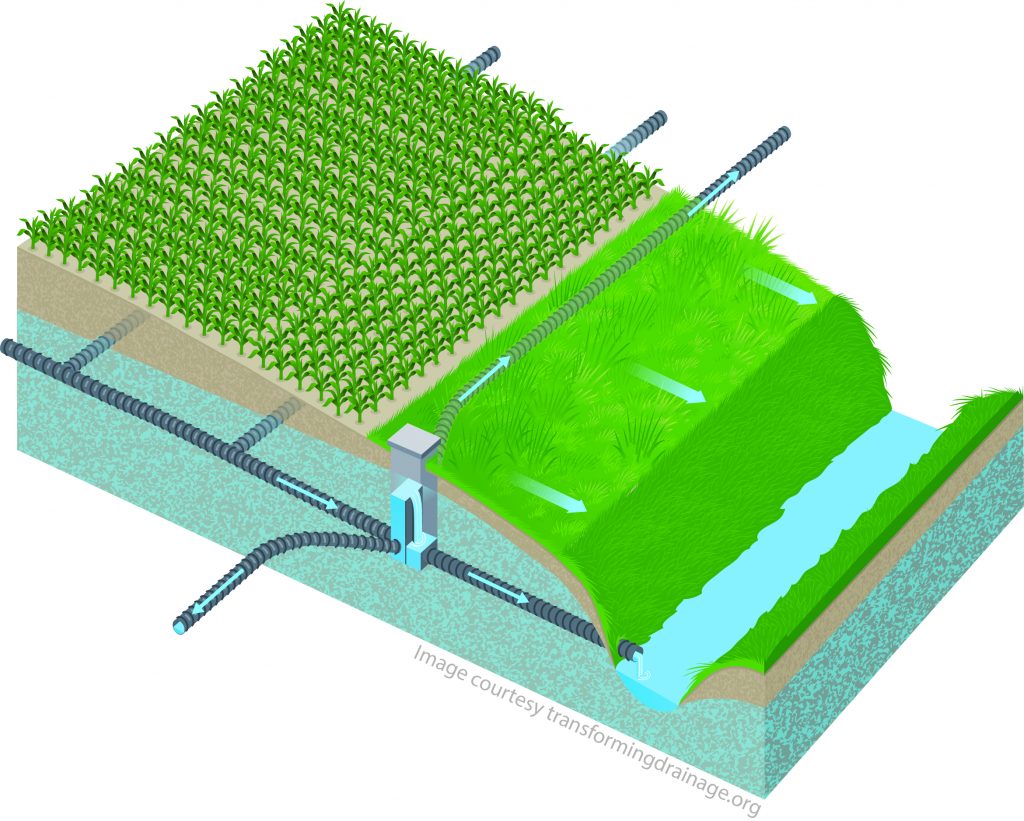
Saturated Buffer Components
Saturated Buffers have 3 main components
- A non-perforated drain pipe
- Water control structure
- Distribution pipe
Ideal sites
A saturated buffer is best suited in a low grade ditch with a fairly flat field. (less than 1% slope). You must also have a sub- surface drainage system draining at least 15 acres and soils with a restrictive layer free of sand or gravel.
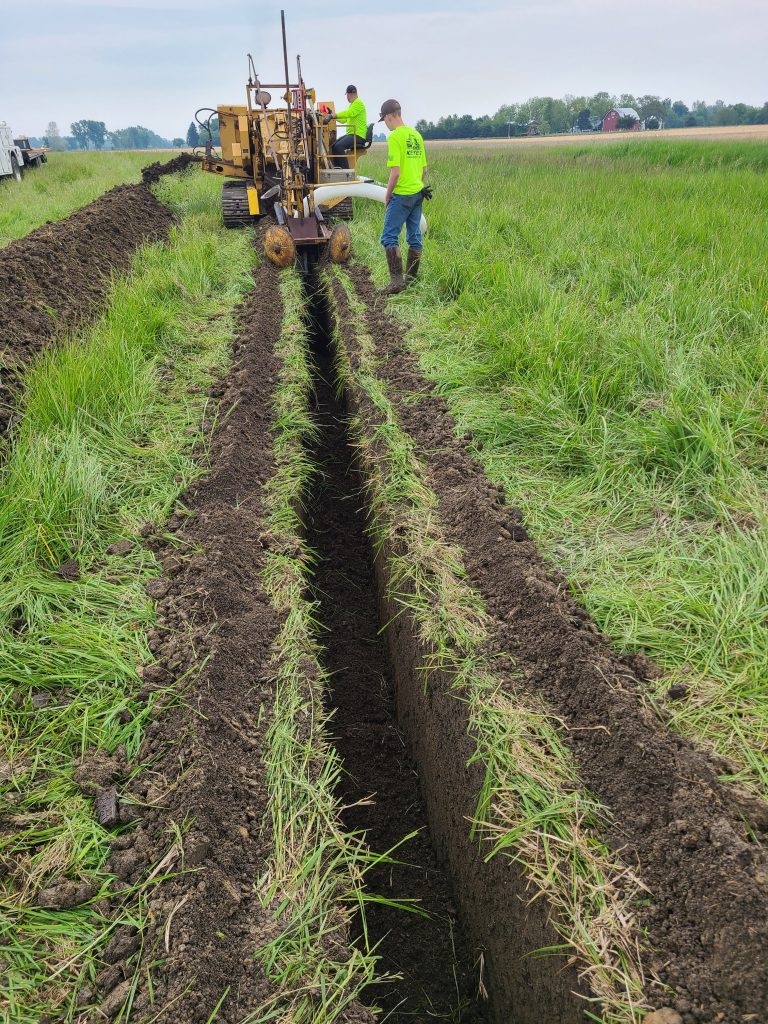
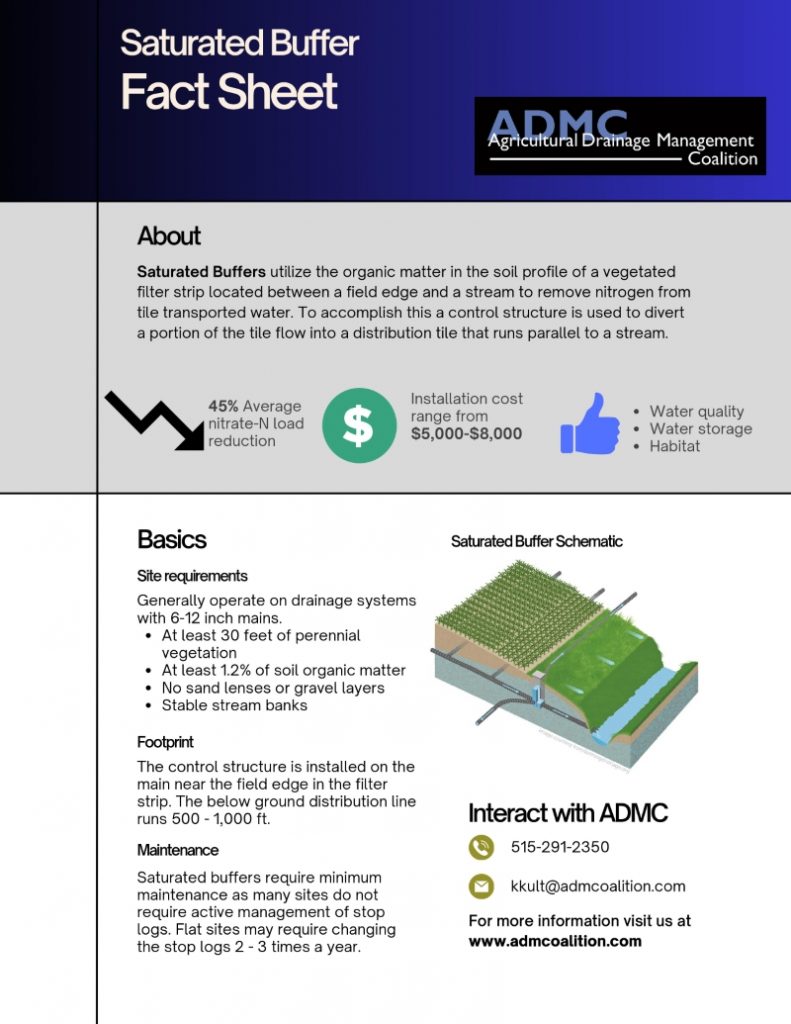
Learn more about saturated buffers and other water quality practices.
Looking for more information on Water Quality?
At ESE, we combine science, service, and sustainability to deliver better results for both agriculture and the environment
Top Links
Services
© Copyright 2026 Ecosystem Services